
Why Technology Reliability Is the Hidden Driver of Patient Satisfaction
Patient experience does not fail because clinicians do not care.
It fails when the system does not support them in real time.
Every breakdown in patient experience traces back to a breakdown in system reliability. Communication delays, inefficient workflows, limited access to information, and inconsistent service do not operate independently. They reflect the strength of the operational foundation supporting care.
For healthcare executives, healthcare IT reliability is not an IT metric. It is a direct driver of patient satisfaction, clinician performance, and organizational outcomes.
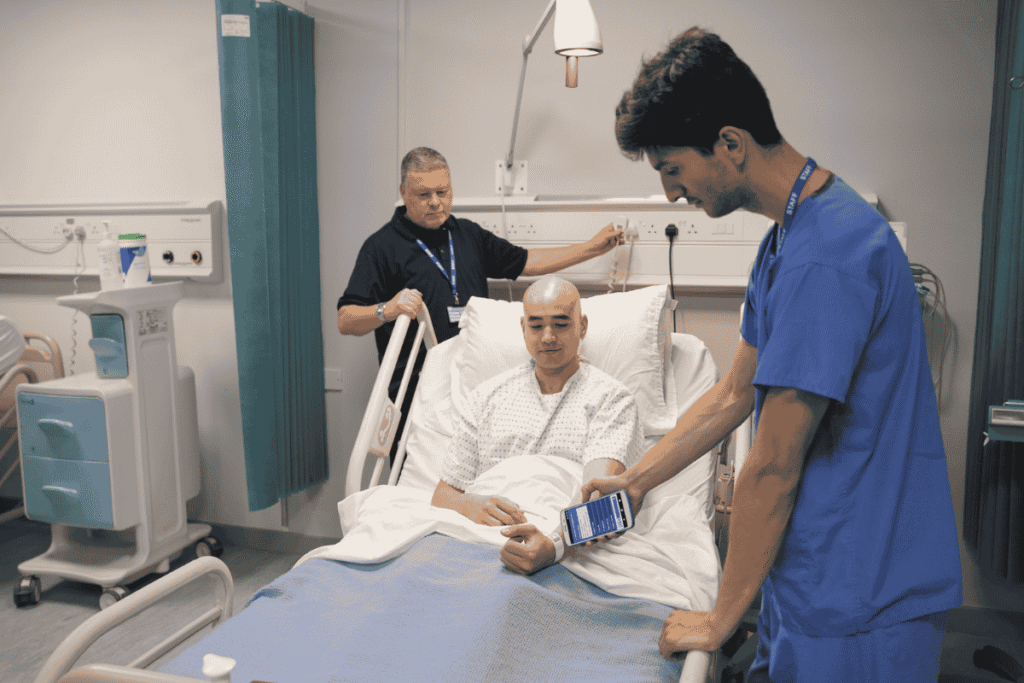
Four Problems. One Root Cause.
Healthcare organizations continue to invest in communication tools, workflow improvements, and digital access. Yet patient dissatisfaction persists.
Across the enterprise, the same four challenges remain:
- Communication delays that create uncertainty
- Workflow inefficiencies that extend wait times
- Gaps in access to timely, accurate information
- Inconsistent service caused by technology instability
These challenges appear operational. In reality, they are systemic.
Each one depends on the same foundation. Technology must work consistently, without interruption, at the point of care. When it does not, delays compound and variability increases.
Patients experience these failures as one continuous signal of quality.
Reliability Shapes Every Interaction
Technology reliability determines how care is delivered moment to moment.
When systems remain stable, clinicians communicate clearly, move efficiently, and access information without delay. The experience feels coordinated and responsive.
When systems become unstable, clinicians adapt. They search for devices, repeat logins, and rely on manual workarounds. Care slows. Communication fragments. Confidence declines.
Patients associate reliability with competence and inconsistency with risk.
Healthcare technology uptime is not a background metric. It is an essential part of the care experience.
Clinical Mobility as a System-Level Solution
Addressing these challenges requires alignment across the clinical environment.
A well-structured clinical mobility platform connects communication, workflows, and information access into a single, reliable system. It ensures clinicians operate without friction at the bedside.
This includes:
- Consistent, real-time access to patient data, alerts, and care workflows
- Reliable device availability supported by structured lifecycle management
- Integrated communication that reduces delays across teams
Mobile device management in healthcare reinforces this foundation. It ensures devices remain secure, up to date, and fully operational across the healthcare facility.
Reliability becomes systematic, not reactive.
From Technology Support to Operational Discipline
Many organizations manage mobility reactively. Devices are deployed. Issues are addressed after they’re already disrupting care.
This approach introduces ongoing instability.
High-performing organizations take a different approach. They treat mobility as an operational discipline. They invest in lifecycle management, proactive support, and real-time visibility into device performance.
This shift reduces downtime, removes variability, and stabilizes workflows at scale.
As workflows stabilize, patient experience improves.
The Executive Imperative
Patient satisfaction reflects system performance.
It influences reputation and long-term growth. It also reflects how well clinicians are supported in delivering care. It also reflects how well clinicians are supported in delivering care.
Leaders must move beyond surface-level improvements and address the infrastructure behind the experience.
- Where reliability improves, communication improves.
- Where reliability improves, workflows accelerate.
- Where reliability improves, trust increases.
This is not a technology initiative. It is a strategic priority.
From Insight to Action
The four most common causes of patient dissatisfaction are well established. What remains is execution.
A system-level approach that aligns technology, workflows, and clinical mobility creates the conditions for consistent, high-quality care.
Patient experience improves when systems perform as expected.
Reliability makes that possible.
If you are evaluating how your healthcare communication technology and clinical mobility strategy are impacting patient trust, contact SMG3Rx to schedule a strategic consultation. Our team partners with healthcare leaders to design and operate secure, scalable mobility environments that strengthen transparency, responsiveness, and confidence at the point of care.


Achieve Enterprise Success with SMG3Rx EDGE
Schedule a Needs Assessment today to learn how SMG3Rx and our additional professional service offerings empower critical infrastructure businesses to boost operational mobility, efficiency, and visibility.