
Medication Barcode Scanning Reduces Administration Risk
Medication administration requires accuracy at every step.
✔️ The right patient.
✔️ The right medication.
✔️ The right dose.
✔️ The right route.
✔️ The right time.
When clinicians rely only on manual verification, risk increases.
A busy shift, constant interruptions, and delayed documentation all create opportunities for medication administration errors. Even experienced clinicians work under pressure, which makes consistency difficult to maintain across every patient interaction.
That is why medication barcode scanning plays such an important role in patient safety.
Manual Verification Increases Risk
Many healthcare workflows still depend heavily on manual processes.
A nurse manually checks a patient’s wristband and medication label. As the shift becomes busier, documentation may be delayed while other patient needs take priority.
These processes rely on attention and recall during high-pressure situations.
As the workload increases throughout the shift, the likelihood of missed details also increases. Delayed or reconstructed charting introduces additional risk when clinicians document medication administration after the fact instead of in real time.
Medication administration errors become more likely when verification depends entirely on manual workflows.
Medication Barcode Scanning Adds Real-Time Verification
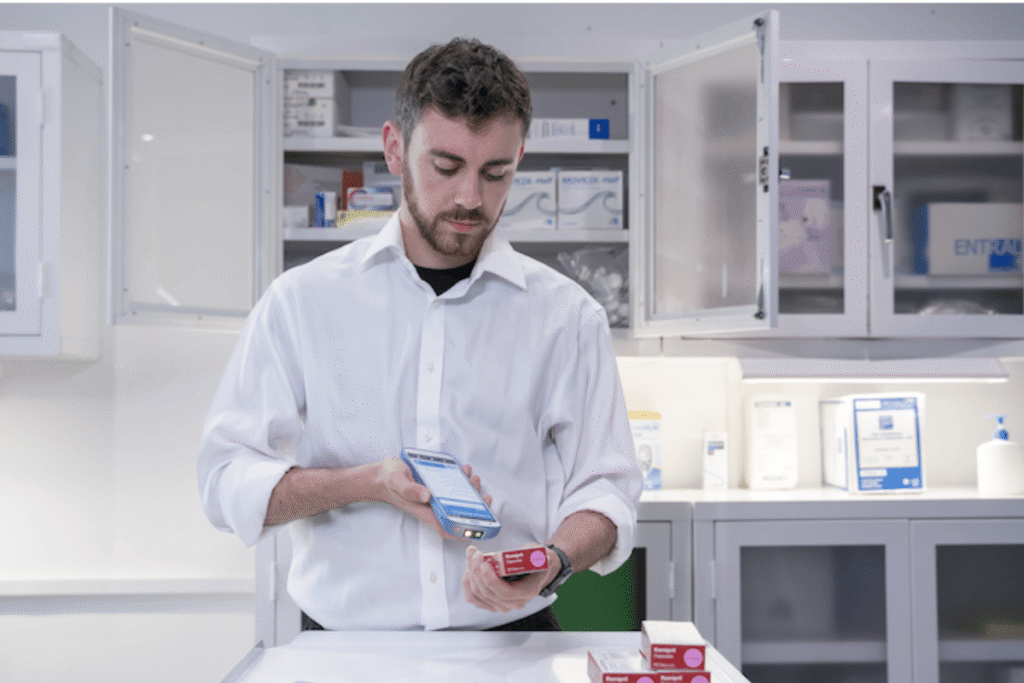
Medication barcode scanning introduces real-time validation directly into the workflow.
A clinician scans the patient’s wristband and the medication barcode before administering the medication. The system immediately verifies whether the medication matches the patient order.
If something does not align, the workflow stops before the medication reaches the patient. This changes medication administration from reactive correction to proactive prevention.
Instead of identifying errors later, clinicians catch potential issues before administration.
Closed-Loop Documentation Improves Accuracy
Verification alone does not eliminate risk. Healthcare organizations also need accurate documentation tied directly to medication administration workflows. Delayed charting creates visibility gaps and increases the chance of incomplete or inaccurate records.
Closed-loop medication administration strengthens that process.
As clinicians scan and administer medications, the system updates documentation in real time. Every administrative event creates an immediate digital record directly connected to the workflow.
This improves accuracy while reducing the burden of manual documentation later in the shift.
Real-time administration records strengthen both patient safety and workflow consistency.
Barcode Workflows Support Clinicians Under Pressure
Clinical workflows move quickly throughout the day. Nurses manage multiple patients, escalating priorities, medication schedules, and documentation requirements simultaneously. Under those conditions, workflows need to reduce friction rather than add more complexity.
Healthcare barcode scanning supports that goal. Instead of relying entirely on manual double checks, clinicians receive immediate confirmation during medication administration. The process becomes more standardized, consistent, and reliable across departments and care teams.
As verification improves, confidence at the bedside improves.
Reliable Technology Supports Reliable Workflows
Barcode medication administration depends on more than scanning alone.
For verification workflows to operate consistently, healthcare organizations need:
- Devices that remain operational throughout the clinical environment
- Reliable connectivity at the point of care
- Hardware that stays updated and properly configured
- Workflows supported without interruptions or manual workarounds
When any of these areas break down, clinicians often revert to manual processes. That reintroduces risk into the workflow.
Managed clinical mobility environments help support reliable barcode scanning across the organization. Devices stay up to date, supported, and aligned with clinical workflows, so verification processes remain consistent at the point of care.
Medication Safety Depends on Workflow Reliability
Medication administration errors remain one of healthcare’s most preventable patient safety risks. Many occur when verification processes break down under operational pressure.
Medication barcode scanning helps reduce that risk by introducing real-time verification and closed-loop documentation directly into the workflow.
These systems do more than improve efficiency. They help clinicians prevent errors before they reach the patient.
If your organization is evaluating how medication barcode scanning and closed-loop workflows may strengthen patient safety, contact SMG3Rx to schedule a strategic consultation. Our team helps healthcare organizations design and support clinical mobility environments that improve medication verification, strengthen documentation workflows, and reduce operational risk at the point of care.


Achieve Enterprise Success with SMG3Rx EDGE
Schedule a Needs Assessment today to learn how SMG3Rx and our additional professional service offerings empower critical infrastructure businesses to boost operational mobility, efficiency, and visibility.