
Standardized Clinical Devices Improve Acquisition Outcomes
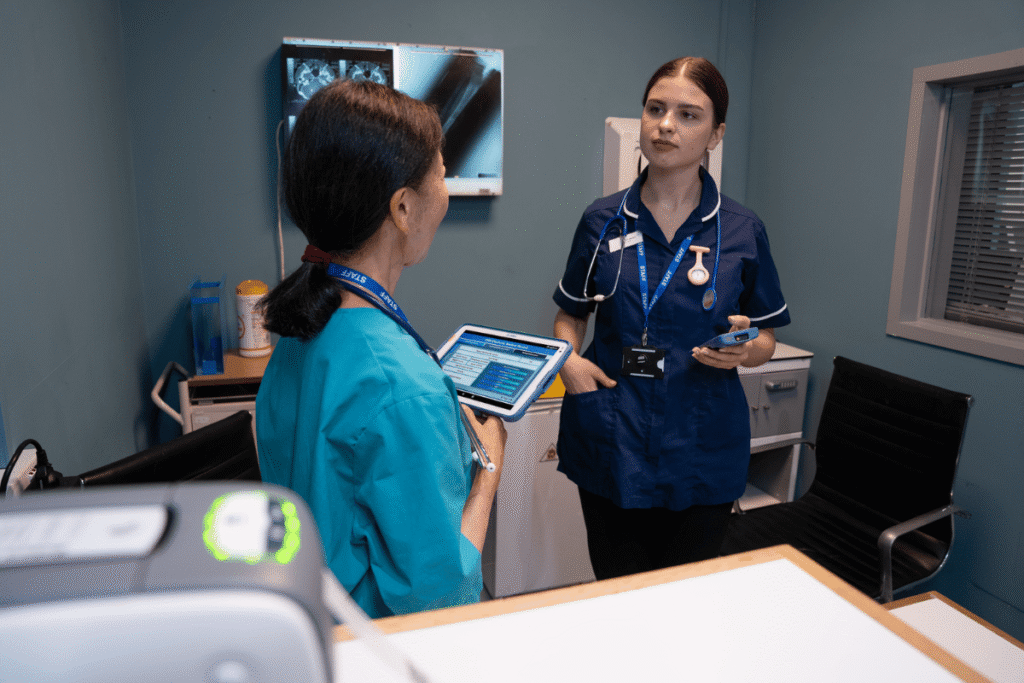
A nurse finishes a shift at one hospital and picks up another at a recently acquired facility.
The patients will vary. The technology shouldn’t.
Instead, the nurse encounters a different login process, unfamiliar applications, and an unfamiliar device configuration. Tasks that should take seconds suddenly require extra steps. The clinician slows down, not because of a lack of experience, but because of new friction between their technology and workflows.
Every interruption pulls attention away from patient care, creates unnecessary frustration, and makes it harder for newly acquired facilities to function as one health system.
Inconsistent Technology Creates Inconsistent Workflows
Hospital acquisitions often bring together multiple clinical device environments that evolved independently. Different operating systems, application layouts, authentication methods, and device settings become part of the same organization overnight.
Without a plan to standardize those environments, clinicians must adapt every time they move between facilities. The result is predictable:
???? Training takes longer.
???? Support requests increase.
???? Technology adoption slows.
???? Clinical workflows become less consistent.
The burden doesn’t stop with clinicians. IT teams spend more time troubleshooting avoidable issues while clinical leaders work to maintain operational consistency across facilities.
Workflow Consistency Supports Better Patient Experiences
Patients may never notice the device a clinician carries, but they will notice if that technology is affecting the clinician’s ability to deliver high-quality care.
A delayed login, an unfamiliar application, or a missing workflow adds seconds to routine tasks. Those delays can interrupt conversations, extend wait times, and reduce the time clinicians spend at the patient’s bedside.
Consistent technology helps create consistent care experiences.
When clinicians know exactly how their devices work, they move confidently through their day. They spend less time navigating technology and more time communicating with patients, coordinating care, and responding quickly to emergency situations.
Standardization Creates Operational Stability
When every facility follows the same configuration standards, organizations simplify operations across the organization, from the bedside to the IT department. That consistency delivers measurable operational advantages:
???? Clinicians use familiar workflows regardless of location.
???? New employees onboard faster.
???? Support teams resolve issues more efficiently.
???? Leadership reduces unnecessary variation across the enterprise.
Every standardized device strengthens the organization’s ability to scale future acquisitions without having to recreate the same integration challenges.
Build Clinical Mobility Standards
Successful organizations don’t standardize by accident. They establish a repeatable process that supports every acquisition. That process includes:
➡️ Standard device configurations.
➡️ Consistent application deployment.
➡️ Unified authentication experiences.
➡️ Repeatable Golden Image deployment across facilities.
Instead of configuring devices one at a time, IT teams deploy proven standards that create a familiar experience for every clinician, regardless of where they work.
The result is a more stable environment that supports both operational efficiency and long-term growth.
Consistency Creates Stronger Health Systems
Every acquisition brings new people, new workflows, and new technology. Organizations can’t eliminate that complexity, but they can reduce it.
Clinical device standardization transforms multiple technology environments into one consistent operating model. It strengthens clinicians’ confidence, reduces support demands, and helps create a more predictable patient experience across all facilities.
Successful acquisitions don’t end when organizations gain visibility into their device environment. They succeed when clinicians experience the same reliable technology wherever they provide care.
If your organization is integrating newly acquired facilities, SMG3Rx can help you standardize your clinical mobility environment with proven processes that reduce operational complexity, support clinicians, and create a consistent foundation for future growth.
Achieve Enterprise Success with SMG3Rx EDGE
Schedule a Needs Assessment today to learn how SMG3Rx and our additional professional service offerings empower critical infrastructure businesses to boost operational mobility, efficiency, and visibility.